

Capture at the Source
Dedicated headers collect gases from evaporators, digesters, chip bins, tanks and foul-condensate stripping equipment while limiting fugitive release.
Collect, condition and safely destroy kraft mill non-condensable gases in one coordinated system—with automated protection, optional heat recovery and downstream flue-gas treatment.
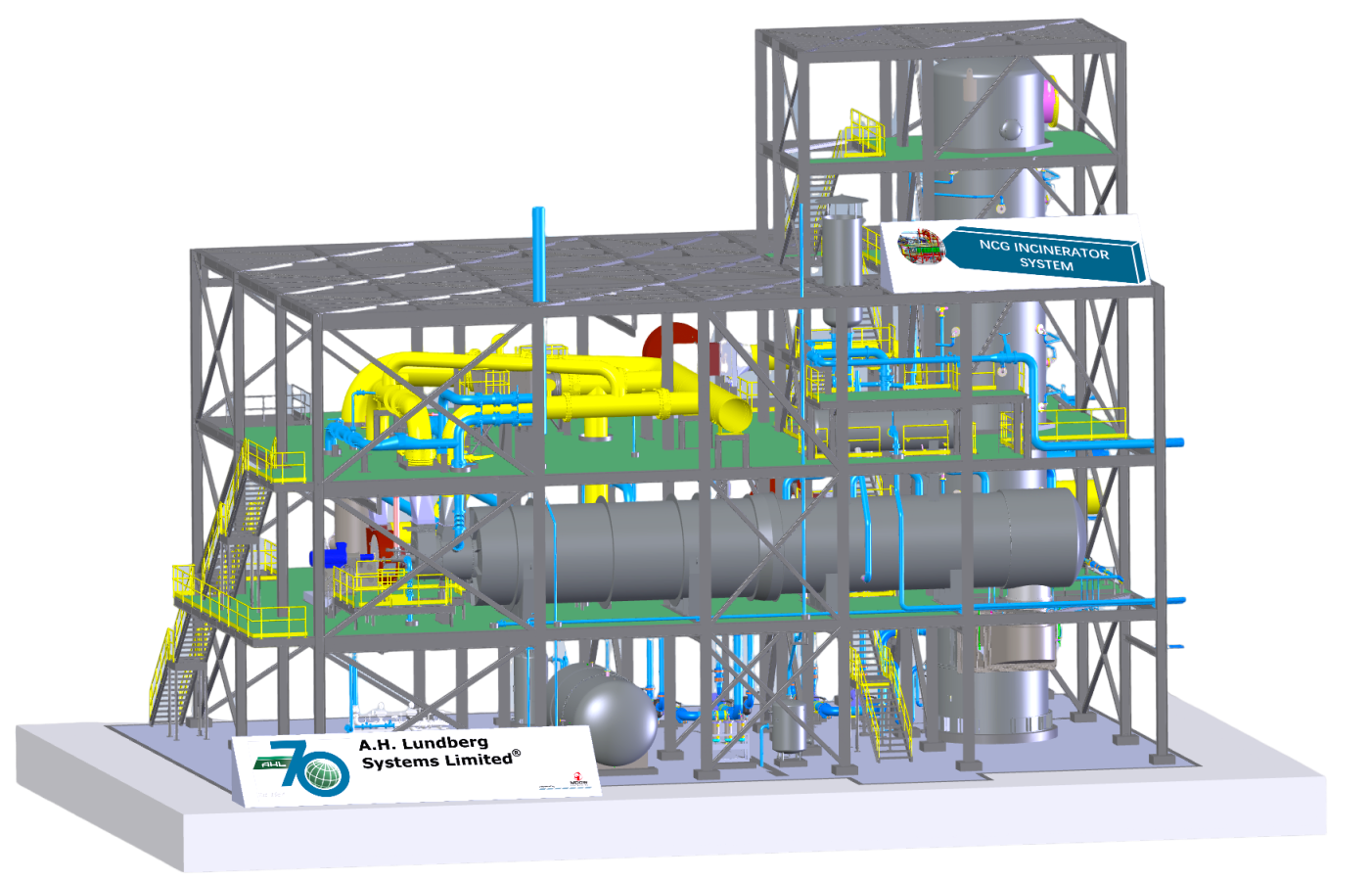
Kraft mill NCG streams can contain reduced sulphur compounds, methanol and turpentine. The system is engineered around their corrosive, toxic and potentially flammable nature—not simply around the burner.
Each gas category receives the collection method, moisture control and protection philosophy suited to its pressure, concentration and ignition risk. The complete package is coordinated through the burner management and plant control system.
Dedicated headers collect gases from evaporators, digesters, chip bins, tanks and foul-condensate stripping equipment while limiting fugitive release.
Coolers and mist eliminators reduce water loading. Condensate drains to a closed foul-condensate system for controlled handling.
Steam ejectors typically move concentrated gas; spark-resistant fans and LEL monitoring support dilute-gas transfer and control.
Fuel, primary air and secondary air are managed for stable temperature and complete combustion across changing NCG loads.
Hot flue gas can pass through a waste heat boiler, converting available thermal energy into plant steam before final treatment.
A high-alloy quench and staged scrubber cool the gas and remove acid-gas loading before discharge or downstream treatment.
The design basis separates high-concentration, low-volume sources from high-volume, low-concentration sources. Chip-bin and stripper-off-gas duties can receive dedicated conditioning and protection.
Low-volume, high-concentration gas commonly motivated by steam ejector and protected by purging, flame arresters and pressure relief.
High-volume, low-concentration gas cooled and dehumidified before spark-resistant fan transfer, monitoring and incineration.
A variable stream that can require dedicated collection, moisture removal and controlled delivery to the selected destruction point.
A methanol-rich stream suitable for dedicated conditioning and controlled combustion, or upstream methanol recovery where justified.
Interlocks continuously confirm flow, pressure, temperature, equipment readiness and purge conditions before gases are admitted.
Discuss Your Design Basis →The package is configured around mill sources, available destruction points, fuel strategy, steam conditions, emission targets, plot constraints and plant tie-ins.
Share gas sources, flow and composition, available incineration points, utilities and emission targets with our engineering team.