

01
SOG Condensation & Feed Conditioning
Stripper off-gas is condensed to form a crude methanol solution. Acid addition controls pH and supports removal of sulphur compounds and ammonia.
Feed preparationRecover value from kraft mill stripper off-gas with a factory-integrated distillation system that upgrades crude methanol into reusable fuel or commercial-grade biomethanol.
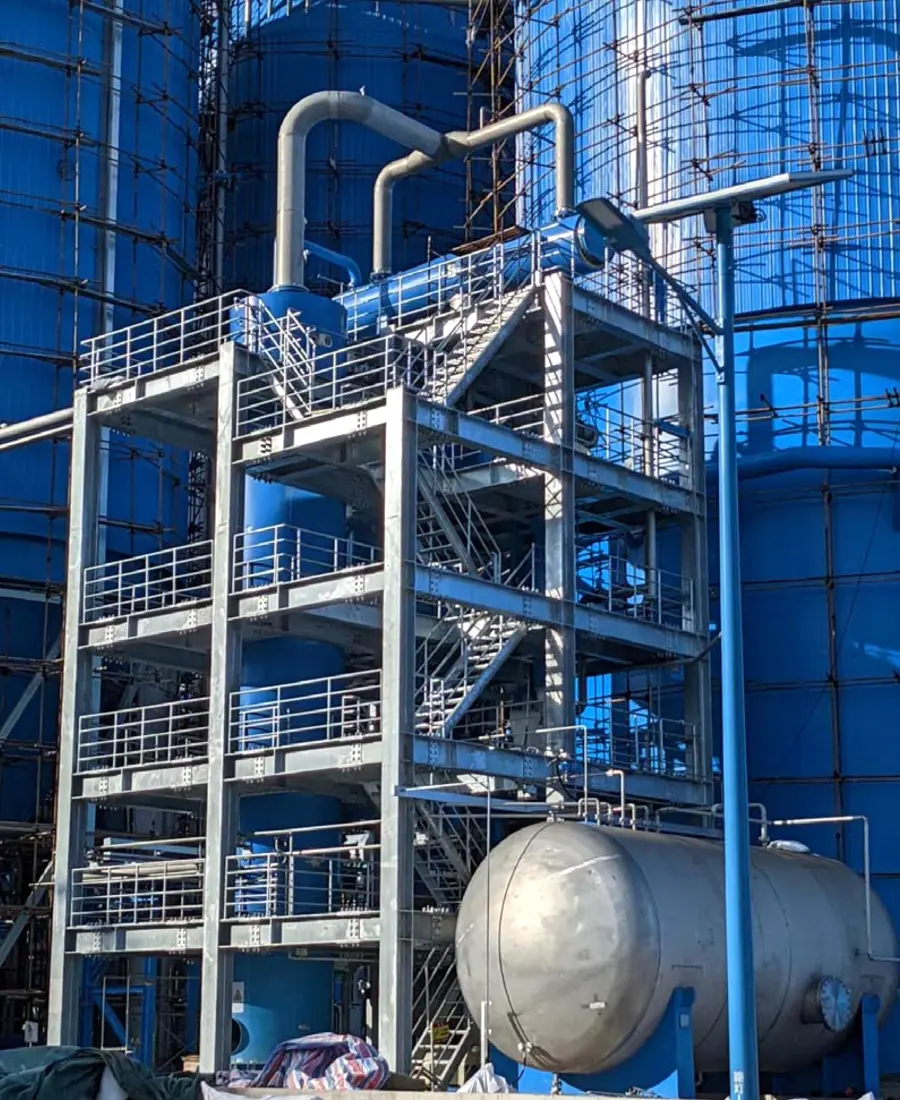
Methanol formed in kraft pulping is recovered through foul-condensate stripping. Instead of sending the methanol-bearing stream directly to incineration, staged distillation can separate contaminants and recover a higher-value liquid product.
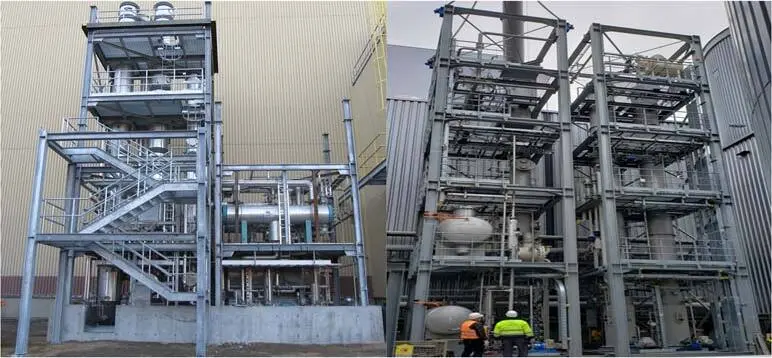
The upgrading stage concentrates crude methanol for fuel service. When commercial-grade product is required, a second purification stage removes light and heavy contaminants through topping and rectification.
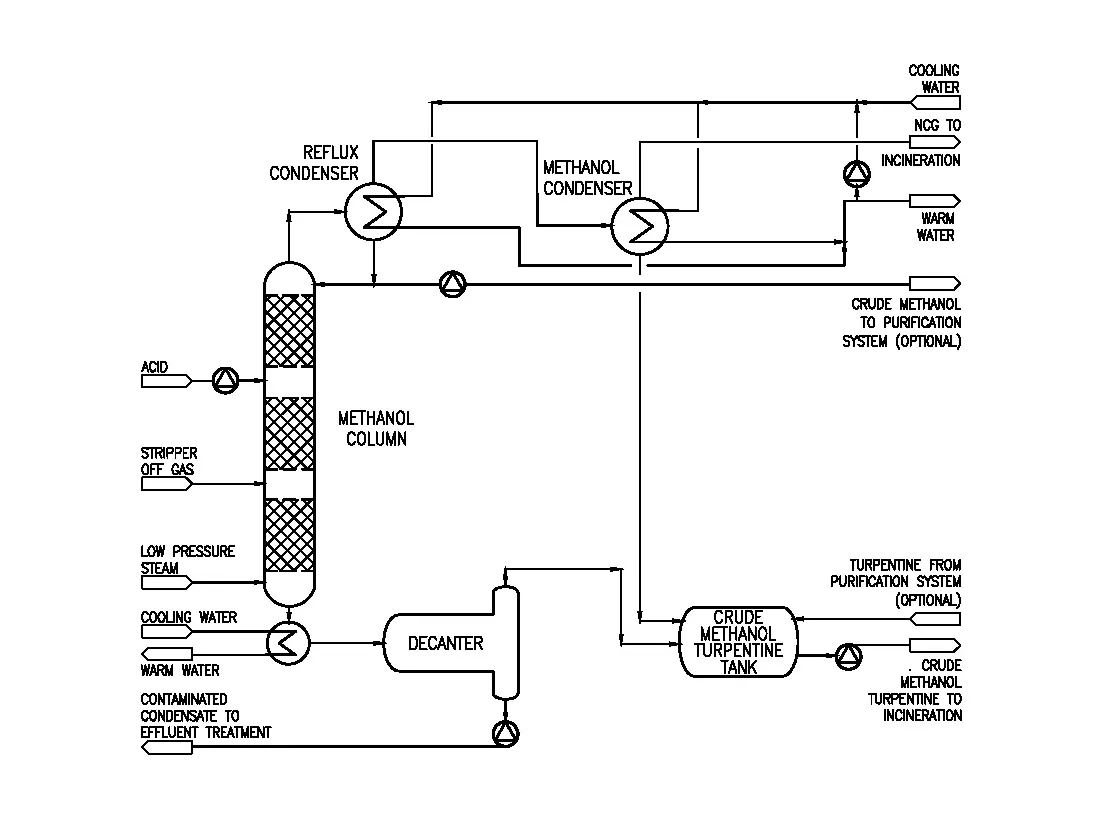
Stripper off-gas is condensed to form a crude methanol solution. Acid addition controls pH and supports removal of sulphur compounds and ammonia.
Feed preparationLow-pressure steam drives distillation in the methanol column. Overhead vapour is condensed, while water and less volatile compounds leave with the underflow.
Typical product: 80–90 wt% methanolFor higher purity, volatile contaminants such as H₂S and ammonia are removed first; purified methanol is then recovered near the top of the rectification column.
Purified product: ≥99.85 wt%The column, condensers, separation equipment, pumps, piping, instrumentation, insulation and access steel can be pre-assembled on structural modules. This reduces field interfaces and supports an orderly installation and commissioning sequence.
Purification is engineered to produce methanol meeting commercial-grade purity targets of at least 99.85 wt%.
Operating flexibility greater than 4:1 helps the system follow variations in mill production and SOG flow.
Interconnecting piping, valves, instruments, insulation and access structures are coordinated before shipment.
Skid-mounted construction limits site fabrication, shortens installation time and supports faster startup.
Process features address sulphur compounds, ammonia, terpenes, organic contaminants and potential fouling.
System capacity and product specification are configured around feed composition, operating profile and end use.
Commercial-grade biomethanol can be reused in the mill, applied in chlorine dioxide generation, stored as auxiliary fuel or considered for sale.
High-quality stripped condensate can reduce plant makeup-water demand and lower the hydraulic load on downstream treatment.
Removal of methanol and moisture produces a residual non-condensable gas stream better suited for controlled incineration.
The final scope is developed from feed analysis, required product purity, available utilities, hazardous-area requirements and plant tie-in conditions.
Discuss Your Application →Share SOG flow, methanol concentration, contaminants, utilities and intended product use with our engineering team.